
For the past couple decades people have been spreading the word on how indoors plants can help clean the air indoors. This is true ALL plants clean the air. I read an article the other day on 8 aromatic herbs that you can grow indoors to help purify the air. Now there were no references to any research, but it does make sense to me. Plants are a part of nature’s cleaning system.
This is a collection of some house plants which help clean the air in the room from pollution, bad smell and lower carbon dioxide naturally.
Some of them repel biting insects, other invite useful wasps that kill the parasites on the other plants.
Most of those plants below will live in perfect coexistence near each other (except the mint, if planted in the same box or pot).
They will also not grow too tall and wide, so you can fill small spaces around your windows and not risk stumbling upon them all the time.
Click on the linked plant name that follow for more information.
Some of them repel biting insects, other invite useful wasps that kill the parasites on the other plants.
Most of those plants below will live in perfect coexistence near each other (except the mint, if planted in the same box or pot).
They will also not grow too tall and wide, so you can fill small spaces around your windows and not risk stumbling upon them all the time.
Click on the linked plant name that follow for more information.
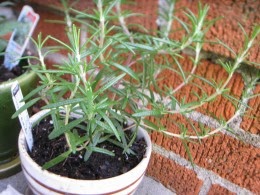
Rosemary
(Rosmarinus officinalis L.)
Some use this herb for cooking, other use it as a herbal tea.
As with all plants having needle-like leaves, the rosemary is evergreen and can be held indoors in the whole winter, still leaving pleasant aroma.
Most of the needle-leaved plants are very good purifiers, especially for humid winter air. They breathe carbon dioxide and exhale oxygen. Rosemary is not an exception.
The most important function of this herb is its ability to improve cognitive function and shield the brain from free radicals. And the presence of this plant in the room is enough in the long run. Rosemary still exhales some of its essential oils in the room (you don't need to boil it in a tea infusion to benefit from it).
 (Ocimum basilicum L.)
Basil is one well known herb and spice.
Naturally it is spread in Asia and North Africa but can easily be cultivated for all climates and domesticated.
Grows about 1-2 feet long with small white blossoms and wide leaves.
The fruit is small 4-seed nut that dries and drops by itself at autumn and can be reseeded in the next Spring. The rich aroma and the pleasant peppery taste are only one part of the coin. It can be also used as herbal tea and as all other plants will reduce the Carbon Dioxide in the room. Gather some leaves for the salad and leave enough smaller leaves for it to grow.
(Mentha spicatta L.)
The best herbal tea for winter.
The best plant for indoor planting.
There are many subspecies which are also called Mint. They include plants suitable with cooking with dry beans, plants suitable for baking meat, others suitable for extracting fragrant oils for perfumery and scent lamps and dozens more.
*They love sun and water but are incredibly easy to grow. The root is quite invasive and strong (smothers and kills other plants around the mint).
(Jasminum officinale L.)
Jasmine opens its flowers between 6 and 8 PM, when the temperature is lower. Having Jasmine aroma when dining is very pleasant.
 (Lonicera periclymenum L.) a.k.a. European honeysuckle or Common honeysuckle
This plant is very useful for indoor stairs, especially if your rooms have sufficient sunlight.
Regardless it is forest semi-parasitic plant growing over tree trunks, it can be domesticated and dwarfed.
You can grow it in pot with a wooden log or dry branch planted in the soil, so the vine can climb on it. It has very sweet scent, especially at night. Can be grown from a seed, and takes about 2 years to start blossoming indoors.
Some use this herb for cooking, other use it as a herbal tea.
As with all plants having needle-like leaves, the rosemary is evergreen and can be held indoors in the whole winter, still leaving pleasant aroma.
Most of the needle-leaved plants are very good purifiers, especially for humid winter air. They breathe carbon dioxide and exhale oxygen. Rosemary is not an exception.
The most important function of this herb is its ability to improve cognitive function and shield the brain from free radicals. And the presence of this plant in the room is enough in the long run. Rosemary still exhales some of its essential oils in the room (you don't need to boil it in a tea infusion to benefit from it).
NOTE: Add dried rosemary to your beef burgers (or any meat burgers) to combat carcinogens (cancer causing agents) and because it gives the burgers an even more fabulous taste.
Tip from Pearl for using Rosemary:
“I try to add rosemary whenever I prepare charred or browned meat. Rosemary is a potent antioxidant. It combats the carcinogens (HCA’s) that are formed when meat is browned or gets charred and crusty. It’s a great idea to add rosemary any time you are trying to get a good crisp on meat but especially important when char grilling."
 Lavender
(Lavandula spica L.)
You need to check if you are not allergic first, but this herb makes very good house plant.- It is excellent insect repellent.
- The aroma relaxes the lungs and helps for calmer night sleep.
- The aroma (also) helps relax if you suffer from anxiety.
Basil
(Ocimum basilicum L.)Basil is one well known herb and spice.
Naturally it is spread in Asia and North Africa but can easily be cultivated for all climates and domesticated.
Grows about 1-2 feet long with small white blossoms and wide leaves.
The fruit is small 4-seed nut that dries and drops by itself at autumn and can be reseeded in the next Spring. The rich aroma and the pleasant peppery taste are only one part of the coin. It can be also used as herbal tea and as all other plants will reduce the Carbon Dioxide in the room. Gather some leaves for the salad and leave enough smaller leaves for it to grow.
 Mint
Mint
(Mentha spicatta L.)The best herbal tea for winter.
The best plant for indoor planting.
There are many subspecies which are also called Mint. They include plants suitable with cooking with dry beans, plants suitable for baking meat, others suitable for extracting fragrant oils for perfumery and scent lamps and dozens more.
*They love sun and water but are incredibly easy to grow. The root is quite invasive and strong (smothers and kills other plants around the mint).
 Jasmine
(Jasminum officinale L.)Jasmine opens its flowers between 6 and 8 PM, when the temperature is lower. Having Jasmine aroma when dining is very pleasant.
Geranium
Geraniums, (Pelargoniums) are more than 200 kinds.
For all of them is valid:

There are above 120 subspecies Coffee plants, with sub-gene arabica being most famous and easy to grow at home. They are spread worldwide and you probably don't know how good this plant can be indoors.
If you are still not convinced or not having too much botanical knowledge - this is the best houseplant for beginners.
Even more: Rose geranium (Pelargonium roseum Willd.) can be used as a helpful herbal tea in Diabetes melitus (type 2). It lowers blood glucose levels very quick.
For all of them is valid:
- Excellent aroma if you can tolerate it.

Rose Geranium - Mosquitoes repellent.
- Don't attract most of the parasites which suck plants dry.
- Looks excellent when blooming.
- Purify air.
- A detached cutting can be grown by just re-planting it. Takes about a week to grow new roots.
- Don't need much care. Can live without water for 2 weeks in cold days.
- More sun = more blossoms.
Coffee plant
(Coffea arabica L.) CAN be domesticated easier than an avocado seedling.There are above 120 subspecies Coffee plants, with sub-gene arabica being most famous and easy to grow at home. They are spread worldwide and you probably don't know how good this plant can be indoors.
If you are still not convinced or not having too much botanical knowledge - this is the best houseplant for beginners.
Even more: Rose geranium (Pelargonium roseum Willd.) can be used as a helpful herbal tea in Diabetes melitus (type 2). It lowers blood glucose levels very quick.
Woodbine
(Lonicera periclymenum L.) a.k.a. European honeysuckle or Common honeysuckleThis plant is very useful for indoor stairs, especially if your rooms have sufficient sunlight.
Regardless it is forest semi-parasitic plant growing over tree trunks, it can be domesticated and dwarfed.
You can grow it in pot with a wooden log or dry branch planted in the soil, so the vine can climb on it. It has very sweet scent, especially at night. Can be grown from a seed, and takes about 2 years to start blossoming indoors.


