Showing posts with label dogs. Show all posts

Friday, March 21, 2014

Proven Ways to Calm Your Dog

Proven Ways to Calm Your Dog from Storms, Separation Anxiety, and Other Phobias


By Dr. Becker
Over Anxious Dog
If your dog briefly startles at loud sounds or hangs back when approached by a stranger, chances are he's exhibiting a normal stress response that is entirely healthy. A short-term reaction to a stressful or unfamiliar event allows your dog to prepare to fight or take flight if necessary. In the wild, the fight-or-flight response keeps animals alive in the face of threats to their survival.
Unfortunately, in today's world, maladaptive stress responses – chronic, long-term anxiety and phobias -- are a growing problem for companion dogs. These fear-based conditions often take the form of separation anxiety, storm and/or noise phobia, or aggression.
A chronic, prolonged fear response can cause both physical and emotional disease processes that can potentially shorten a dog's life and negatively impact quality of life. Chronic stress can depress your dog's immune system, putting him at higher risk for opportunistic infections. It can trigger the development of compulsive behaviors, and it can also alter blood flow to vital organs.

Signs of Maladaptive Stress Reactions in Dogs

A dog can be assumed to be anxious and/or fearful when she exhibits certain behaviors. These include:
Crying or whining Loss of appetite
Drooling Pacing
Ears held back Panting
Hiding Shaking
Inappropriate elimination Tucking tail
Lip licking Vigilance
Looking away (from a threat) Yawning

In addition to these behaviors, if your dog has a storm phobia, during thunderstorms she may also tremble, try to stay close to you, engage in destructive behavior, or try to harm herself.
It's important to understand that storm phobias differ significantly from other similar fear-based conditions. Whereas there are generally just one or two triggers for dogs with separation anxiety or general noise phobia, storm-phobic dogs can react to any number of storm-related triggers, including the boom of thunder or the crack of lightning, the sound of wind or pouring rain, darkening skies, changes in barometric pressure, and smells that precede or accompany a storm.
Storm phobias are a class of noise phobias. A noise phobia is defined as a sudden and profound, extreme response to noise, manifested as intense, active avoidance; escape; or anxiety behaviors associated with the activities of the sympathetic branch of the autonomic nervous system. Some dogs react to noise phobias by freezing and withdrawing, while others respond by crashing through windows or chewing through restraints or enclosures. While the former behavior may seem less extreme, the fact is both reactions indicate profound suffering and damage to nerve cells.
If your dog has separation anxiety, common behaviors may include the need to be within a few feet of you at all times; frantic greetings, whether you've been out of sight a few minutes or several hours; a noticeable mood change when she senses you're preparing to leave the house; and performing behaviors while you're gone she doesn't do in your presence.

Treatment Options:

Helping your dog avoid the trigger(s) of his anxiety or phobia is very important. Unfortunately, it can be difficult to do. Most owners of storm-phobic dogs can't simply pick up and move to a location with temperate weather. Often the trigger for a noise-phobic dog is a normal, everyday sound like a kitchen blender, a vacuum cleaner, or the garbage truck that comes down the street twice a week.
If your pet has a thunderstorm phobia, you can consider making a safe room, which is a place your dog can escape to when a storm is approaching – whether or not you're home. The goal is to limit her exposure to as many aspects of thunderstorms as possible. The room should have no windows, or covered windows so the storm can't be seen. If necessary, soundproofing wallboard can muffle outside noise. Put a solid-sided crate in the room with the door left open, along with a bit of food, water, treats and toys.
For a noise-phobic dog, you may try leading or removing him to a quiet room in your home and either leave him alone there to self-soothe (as long as he's not frantic), or stay quietly with him. A silent, still environment can often provide relief. Some phobic dogs will seek out dark, quiet corners on their own where they can calm themselves, so consider providing a darkened room, a closet floor, or space under a table or desk for a frightened pet. The goal is to give your dog a secure spot that helps him calm himself.
Sometimes playing soothing or calming music to help reduce the impact of sound stressors can also be of benefit to these dogs (as long as playing the music doesn't correlate to the stressor, so if you're using music to help drown out scary noises, use the calming CD during non-stressful times of the day as well). 
Desensitization involves exposing a dog to an anxiety-producing trigger to a level at which the fear response is extinguished. For example, if your dog were afraid of strangers, desensitization would include having a stranger come close enough so that your dog knows he or she is there, but far enough away so your pet doesn't exhibit a fear response. The distance between your dog and the stranger is then gradually decreased, ideally as your dog slowly approaches the stranger. Allowing the dog to make the approach rather than the stranger helps your pet feel safe and in control.
Desensitization of a storm-phobic dog involves using a CD with reproduced storm sounds. Again, it's best to do this during times of the year when actual storms are few and far between and not only when an actual storm is occurring.
Unfortunately, desensitization isn't always as effective with storm phobias as it is with other types of anxiety disorders. That's because it's difficult to mimic all the various triggers that set off a fear response in a storm-phobic pet – in particular changes in barometric pressure, static electricity, and whatever scents dogs notice with an impending change in the weather. In addition, desensitization has to be done in each room of the house, because a new coping skill your dog learns in the living room will be forgotten in the kitchen. These problems make desensitization more of a challenge in treating storm phobias.
If your dog has separation anxiety, you'll want to desensitize her to all the sights and sounds involved when you're preparing to leave the house. In other words, go through all the motions of leaving without leaving. Since you probably don't know exactly which cues your dog is reacting to, you'll need to observe her carefully and also make a mental list of your preparing-to-leave activities. These will include things like turning lights on or off, putting on shoes or a coat, adjusting the thermostat, picking up a briefcase or purse, jingling car keys, walking to the door, opening the door, and so forth.
Start with the first preparing-to-leave activity you normally perform and do it over and over – again, without actually leaving the house -- until your pup no longer takes much notice of that particular action. Then add the next activity. Then the next and so on, until you're able to leave the house for at least an hour and your dog remains calm while you're gone. This can be a long, tedious process, but it's often very effective.
Counterconditioning involves consistently and repeatedly pairing a negative trigger with a positive one, until your dog makes a positive association. For example, if your dog exhibits a fear response each time you turn on the vacuum cleaner, offer him a treat each time you turn it on. The goal is to condition him to associate a treat with the noise of the vacuum cleaner.
Behavior modification can be useful for storm-phobic dogs. Ask your dog to perform a command he's familiar with and reward him if he does. This activity distracts both of you -- your dog from his fear of the storm, and you from the temptation to inadvertently reinforce your pet's phobic behavior by petting and soothing him while he's showing anxiety.
Another type of behavior modification involves getting your dog busy with a more pleasant activity than storm watching. Play a game with him or give him something to gnaw on. One of my favorite ways to distract pups is by nose work. Use your dog's natural senses to divert his brain waves. Be aware that if your pet's response to storms is intense, you may not be able to engage him in another activity early in his treatment program, especially if he correlates the activity to the scary storm.

Additional Tips to Help Anxious, Fearful Dogs

For dogs with separation anxiety:
  • Leave your dog with an article of clothing or blanket with your scent on it.
  • Leave a treat-release toy for your dog to focus on in your absence. Place small treats around the house for her to discover, along with her favorite toys.
  • Add a flower essence blend like Separation Anxiety from Spirit Essences to her drinking water. This works wonders for some dogs. And put on some soothing doggy music before you leave.
  • Invest in a DAP collar or diffuser for your dog. D.A.P.™ is an acronym for Dog Appeasing Pheromone and is designed to have a calming affect on dogs.
  • Make sure your dog gets plenty of exercise, playtime, mental stimulation and TLC. The more full her life is when you're around, the calmer she'll be when you're not.
For dogs with noise and/or storm phobia:
  • Play calm, soothing music (MusicMyPet.com, PetMusic.com) before a possible stressor occurs. This may relax your dog and have the added bonus of drowning out distressing noises.
  • Try putting gentle, continuous pressure on your pet to calm her. If your dog will allow it, try leaning gently on or against her without petting or stroking. If this is helping your pup, you'll feel her muscles begin to relax. If instead she seems to grow more anxious, this isn't a technique that will be helpful for her.
  • If your dog seems to respond well to pressure applied to her body, there are wraps available (Thundershirt.com, Anxietywrap.com, Stormdefender.com) that many pet owners and veterinarians find extremely helpful.
  • Ttouch is a specific massage technique that can help anxious pets.
  • Consult your holistic vet about homeopathic treatments.
  • The essential oil of lavender has also been proven to reduce a dog's stress response. I recommend placing a few drops on your dog's collar or bedding before a stressor occurs, if possible, or diffuse the oil around your house for an overall calming effect.
FOR MORE DETAILED ADVICE, PLEASE CLICK HERE.

Tuesday, December 3, 2013

Pet Myth #7: Flea collars

Frontline or advantage/advantix is the best option for fleas.  
The chemicals in flea collars are toxic to many pets and kids also.

The reality: "We know that they (flea collars) don't work—the research on flea collars has shown that the effectiveness is only where the collar touches," explains Dr. Rubin. "You'll find fewer and fewer on the market. I've seen dogs with flea collars in the past and fleas are running all over the rump of the animal. Dr. Rubin recommends veterinary hospital-sold products like Frontline to prevent fleas and ticks. Just be sure to never mix up cat and dog products—products designed for dogs can be deadly if applied to cats.

How Flea Collars Work

Flea collars can be found at grocery stores, pet stores and at a veterinarian's office. The flea collars bought or recommended from your vet tend to be more effective than the inexpensive ones in the grocery stores. There are two types of flea collars. The first type emits a gas that is toxic to fleas. This gas is supposed to keep fleas away from your dog, although it works best for the head and neck area where the collar is located. The other type of flea collar emits a toxin absorbed into your dog's skin, and it should kill fleas if they bite your dog. Flea collars are most effective for killing adult fleas; however, some collars are made with Insect Growth Regulator to prevent flea eggs and larvae.

Electronic flea collars are another type of collar. These collars do not have a good reputation for controlling fleas. They are also called ultrasonic flea collars. The way they are supposed to work is that the collar puts out an ultrasonic noise that should keep fleas and ticks away from your dog. They are usually between $25 and $50, and they last for several months and even years. Some of these electronic flea collars also have an insecticide on the plastic to help with flea control. The problem with these collars seems to be that the noise is emitted too infrequently to ward off pests.

Flea collars are not as popular as they used to be. Many people worry that fleas bite their dogs before the fleas actually reach the flea collar. A lot of pet owners are using flea medications such as Frontline and Advantix. These are liquid medications applied to the neck area of the dog, under the hair, right on the skin. They last for one month, and some are waterproof. The amount of medication a dog needs depends on the weight of the dog. Many of these medications also kill flea eggs and larvae. Some people may use flea shampoo on their dogs or get their dogs dipped to prevent flea problems, although these methods are also not as popular as flea medications.


Friday, November 29, 2013

Dogs React to Tail-Wagging Direction

http://www.vetstreet.com/our-pet-experts/pet-scoop-dogs-react-to-tail-wagging-direction-firefighters-rescue-dog-from-floods?WT.mc_id=cc_yahoo
(see original posting by clicking here)

I always wondered why they wag their tails. It's amazing what information you can find online!  I think there is more research to be done about this and similar programs.


Dogs Respond to Tail Wagging

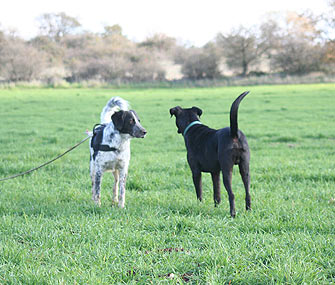
A new study reveals that dogs notice which direction a fellow dog is wagging its tail, and react accordingly. When the dogs in the experiment watched a video of another dog wagging its tail to the right, they remained at ease, with some even approaching the dog on the screen. But when they saw video of a dog swinging its tail to the left, they became more anxious and their heart rates increased.

The Italian researchers think both the tail wagging direction and the other dogs’ responses to it could come from their automatic responses rooted in different hemispheres of the brain. “A dog looking to a dog wagging with a bias to the left — and thus showing right-hemisphere activation as if it was experiencing some sort of negative/withdrawal response — would also produce anxious and targeting responses as well as increased cardiac frequency," said researcher Giorgio Vallortigara of the University of Trento. "That is amazing, I think." The findings were published in the journal Current Biology. — Read it at Live Science


Dog Rescued From Floodwaters


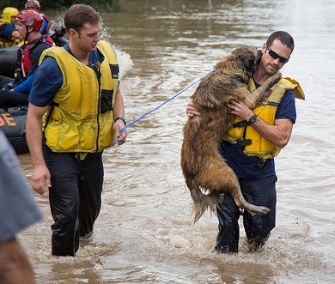
Fire crews in Austin, Texas, have been helping to evacuate 1,100 homes after a fall storm dropped 15 inches of rain on the region, resulting in widespread flooding.

This sweet picture by photographer Preston Culver captured firefighters Matt Harvey and Michael Cooper rescuing a dog from the flooding. “We don't just rescue two-legged victims … we love our four-legged friends as well,” the Austin Fire Department said when it shared the photo.


********************************************************

I normally find my posting material on other blogs or shared information from the web. I do not claim to personally own the material unless I have truly authored it. I usually try to share my overall understanding of any given topic (in this green text), but if applicable, I want to give credit where due by sending you to the author of the original information. It's only fair to them. 

To see older posts, click on the "Daily Posts" link at the top of my blog page. If you want to go back even further in the postings, just click on the "older posts" link found under the last post shown.

I hope this information has been of some help to you. As always, if you would like to add a thought, questions, give a suggestion for another topic, or simply make a general comment, please post a comment. I really appreciate feedback. 

Please follow by email & subscribe to this Jazmin's World blog.  And visit and please "like" Jazmin's World Facebook page (facebook.com/jaztrade - link is in the blog column.)

Thank you! 
Carol

Wednesday, November 27, 2013

Should Dogs Eat Turkey Bones? The Answer

After that big Thanksgiving or Christmas meal, what do you do with the left-over turkey bones? Throw them away? Give them to the dogs? Maybe cook them down for turkey stew later?  

Well, there is only one end result that is safe for our pets. Toss the bones ESPECIALLY after boiling them for stew, if you happen to do that. No matter how you look at it, ANY cooked poultry bone has a chance of splintering and sending you and your pet to the nearest pet hospital. So do them and yourself a favor and just tuck them far down inside the trash where they cannot pick them out when you are not looking. 

That being said, you CAN give them the UNCOOKED poultry bones if you are not going to cook them for some reason. Like the neck or maybe the wings. Those would be great treats for your dog and actually good for their teeth.  

Read on for more info that will put it all in perspective for you.

Here are the answers I found online today:


From Yahoo Answers:
If cooked, throw them out!!!
If Raw, go ahead with feeding them, just make sure a little meat is on them.
Note: Chicken and turkey bones are fine as long as they are not cooked. Turkey and chicken bones as long as they are raw, are fine to feed.
I've found that compressed rawhide and Greenies are the best for keeping teeth clean. 
From Pet Doctors:
No!  Turkey bones need to be cleared away properly and not stuck in the top of the rubbish bin which can easily be pawed out.
Cooked bones, especially poultry bones, tend to splinter so they could puncture your pet’s stomachs and lead to a serious infection.
From Dogster.com:
Yes, dogs can most definitely eat turkey, as a general rule. Just not cooked which causes splintering as they chew.

Many premium dog food blends are made with turkey.
What is not good for dogs are COOKED turkey skin, bones or turkey fat. Also, make sure that no onions have come in contact with the turkey since onions ARE toxic to dogs. To a slightly lesser extent, garlic isn't great for dogs, either. Many foods and treats for dogs contain garlic, but many dogs cannot tolerate it and some can be fatally allergic to it.

Anytime you're feeding table scraps to your dog, make sure it is in conjunction with his regular diet and make sure it isn't in excess. Dogs can suffer from a condition called pancreatitis when given too much fatty food. Pancreatitis is serious and is often fatal if not diagnosed quickly, and there are often very subtle signs, so it is important to avoid too much fat in the diet.
 Another Dogster answer:
If it's cooked, don't feed the bones and remove the skin (because of seasonings, etc). also be aware that some store bought turkeys are "brined" and can be quite high in salt.

If you're feeding it raw there isn't much to worry about. Our dogs get necks and occasionally wings raw and love them. they eat the bone, skin, and meat w/o problems.
Another Dogster answer:
Raw turkey can be fed whole - skin, bones, and everything. Raw turkey necks are great for keeping your dog's teeth clean, by the way.

If it is cooked turkey, you definitely need to take into account what spices were used. Food that is very salty or spiced with onions or garlic can be very dangerous to your dogs.

When cooked, don't feed the skin or the bones, either - just the meat. The bones are altered in consistency when they are cooked, making them brittle and easy to splinter which can be very harmful. The cooked skin is very fatty.

Wednesday, November 20, 2013

5 Low-Maintenance, Easy-to-Groom Dog Breeds


You want a dog, but you're concerned about the amount of work involved to keep him happy, healthy and looking good. Fear not! Although dogs need and deserve time for exercise, purposeful play and training, you can select from an array of breeds with a low-maintenance grooming reputation.

From brushing to odor control to water-resistant coats, various dog breeds sport certain characteristics that make them easy to care for in different ways, even if they don't always appear to be at first glance. Take a gander at the following breeds who rank high in these five low-maintenance grooming categories.

Lhasa Apso: Has a Reputation for Minimal Shedding
All dogs shed to some degree, but some strew fewer hairs than others. The Lhasa Apso has a long and beautiful coat, but the humanlike hair doesn't constantly drop all over the house or cling to your clothes. Lhasas do require regular shampooing and combing to keep their lovely locks tangle-free, but you can minimize grooming requirements by asking a professional groomer to style them in a cute, short puppy clip. Other breeds with low-shed reputations include the Poodle, Italian Greyhound, Miniature Schnauzer, Saluki, Cockapoo and Portuguese Water Dog.

Siberian Husky: Repels Dirt With Ease and Efficiency

(photo credit: Sally Anne Thompson, 
Animal Photography/Vetstreet.com
)

Sounds too good to be true, but yes, some breeds have coats that shed dirt the way some dogs shed hair. A good example is the Siberian Husky, which has a thick double coat, meaning it has an insulating under layer and a protective top coat. The undercoat produces oils that help to repel dirt. In addition, Huskies preen themselves in much the same way as cats, so bathing is rarely needed. Brushing is a different story. Huskies must be brushed at least twice a week to remove loose hair so it doesn't litter the furniture and floor. Mark your calendar - Huskies shed heavily twice a year, in spring and fall, and must be brushed more frequently during those times. Other breeds with dirt-repelling coats include the Dalmatian, Weimaraner, West Highland White Terrier and Basset Hound.

Pomeranian: Emits Little or No Doggy Odor
Some breeds, especially those with oily coats, emit a not-so-pleasant odor, but fortunately for people with sensitive noses, there are breeds renowned for having little to no "doggy odor." One such popular pup is the Pomeranian, a toy breed with a thick double coat that comes in many colors and patterns. Brush the Pom coat at least twice a week to remove dead hair. Other breeds that don't smell doggy include the Vizsla, the Canaan Dog and the Shetland Sheepdog.
see Also: How to Keep Your Home Pet Odor-Free

Icelandic Sheepdog: Blessed With Easy-to-Brush,Tangle-Free Tresses
The easiest dogs to groom are those with short coats, but occasionally one comes along with a furry coat that rarely if ever mats. The Icelandic Sheepdog has a harsh, thick double coat that can be medium-length or long. Choose one with the shorter coat for easiest care, and avoid an Icelandic whose coat is soft rather than coarse. The soft coat is much more likely to tangle. Other breeds that are easy to groom - although they definitely shed - are the Beagle, Pug, Boston Terrier, Doberman Pinscher and Greyhound.

(photo credit: Nick Ridley, 
Animal Photography/Vetstreet.com
)
Golden Retriever: Water Literally Rolls Off Their Coats 
Born to be wet, some breeds have thick, oily coats that insulate their wearers from temperature fluctuations and repel water so that the dog dries quickly after a dunking. The Golden Retriever is a classic example. The skin oils that coat the fur not only repel dirt, they also cause the coat to dry quickly with a good shake. Other water-loving dogs with water-repellent, quick-drying coats include the Otterhound, Newfoundland, Labrador Retriever, Irish Water Spaniel and Airedale. Unless they've rolled in something stinky that can't be brushed out, most water dogs need a bath only rarely, from once a month to once or twice a year. 

*****************************************************************

I normally find my posting material on other blogs or shared information from the web. I do not claim to personally own the material unless I have truly authored it. I usually try to share my overall understanding of any given topic (in this green text), but if applicable, I want to give credit where due by sending you to the author of the original information. It's only fair to them. 

To see older posts, click on the "Daily Posts" link at the top of my blog page. If you want to go back even further in the postings, just click on the "older posts" link found under the last post shown.

I hope this information has been of some help to you. As always, if you would like to add a thought, questions, give a suggestion for another topic, or simply make a general comment, please post a comment. I really appreciate feedback. 

Please follow by email & subscribe to this Jazmin's World blog.  And visit and please "like" Jazmin's World Facebook page (facebook.com/jaztrade - link is in the blog column.)

Thank you! 
Carol

Monday, October 7, 2013

Pet Myth #1


I am always trying to feed my pets what is the best for them, so when I saw this article via Organic Gardening I had to share it!


Pet Myths Debunked


Recent dog food and treat recalls may have you thinking a bit more not only about what's on your plate, but what's in your dog's bowl, too. After all, pets are part of the family, and we want to keep them healthy. So we (Organic Gardening) invited Shelly Rubin, VMD, director emeritus of Blum Animal Hospital in Chicago and past president of the Illinois State Veterinary Association, to debunk common pet myths so we can keep our furry friends safe and healthy. (Rubin also served as veterinarian to Oprah's dogs for 15 years!)

 Myth #1: Table scraps are good for dogs. The reality: With the dog treat recall and past dog food scandals, such as the melamine-tainted food that killed thousands of pets in 2007, it might seem that people food could be a better choice for your animal companions. But Dr. Rubin warns against going there, because our animals' health improves when they receive a consistent source of fat, protein, and carbohydrates—and that's not how human diets generally work. 
He recommends a high-quality natural food, such as the Wellness and Holistic Selectbrands. Other good options include Organix, a high-quality pet-food line that's certified organic; Annameat is also a high-quality, made-in-the-USA dog food that doesn't source ingredients from China. 
Be sure to feed your dog appropriate portions of a high-quality food twice a day, as opposed to letting food sit out in a bowl all day. And forget about doling out excess treats—the majority of America's pets are already obese. "Show love with petting and attention rather than feeding them," says Dr. Rubin. 
Healthy dog treats include baby carrots, cauliflower, cut-up apple pieces, lettuce, pear pieces, and even watermelon (just don't give them the seeds, and avoid produce that has a stringy texture—it could cause digestive distress and get stuck in their teeth). 

Also, never feed dogs grapes or raisins because they often cause canine renal failure. Avocado pits are also extremely toxic to dogs.